
TRIGGER WARNING: DESCRIPTIONS OF SEXUAL ASSAULT
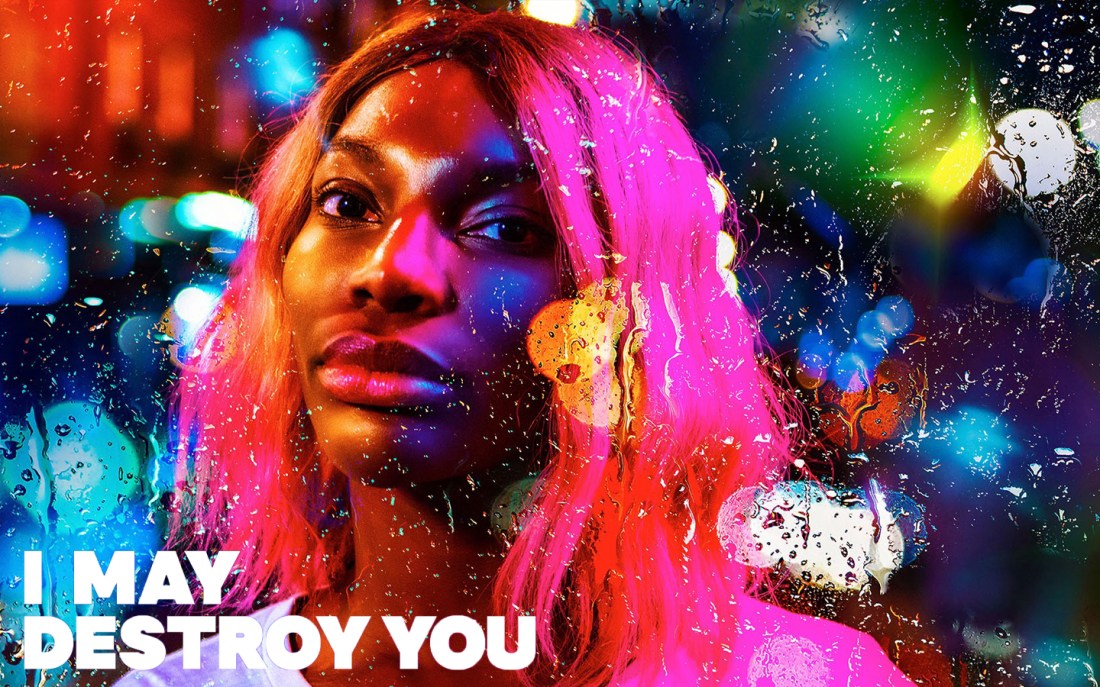
As millennials, we are engaging in risky behavior in the name of freedom to create serendipitous vehicles in the journey of living a life without FOMO and this show is a description of what happens when you live without boundaries and being truly ‘free’. I May Destroy You is the sophomore outing by the massive talent of Michaela Coel’s, whose story writing is simple, to the point, and blunt. In a 12 episode season, the audience is taken on a what is an anthology of the different variations of sexual assault; exploring themes of consent, dealing with the trauma, toxic friendships, young adulthood, and sexuality. The viewers are an omnipotent presence, observing the characters as they delve into their journey of self-discovery and realizations on how they want to live their life by choosing what they want to pursue and things that happen while living that lifestyle. With London as it’s backdrop, the soundtrack adds to the vibe of the show that is very grimy and hip, sort of what a big city sounds like to a 20 something – dirty, fast, blurry and somewhat confusing.
The second episode of the season sets up the story leading to the present. The vibe of the episode reminded me of those sultry times where we’re just living life carefree; when we often found ourselves in places where the lights got blurry and floor gets heavy. This episode especially stood out to me because of the accuracy in the life of a 20 something. It is also what really is the driving force of the show. The black girl who is a viral tweeter goes on to acquiring a book deal because she writes about accepting your big African lips even if there are starving kids in Africa is an accurate portrayal of the world that the millennial lives in. Yeah, we care about the wars in Syria and the burning forests in Brazil and Australia but we also care about how society is viewing our physical and mental identity. Are we really only the sum of who we are on a day to day basis but also the issues we care about as well?
Having spent a couple hundred words describing what exactly is the world that Michaela has built for Arabella… the real story here isn’t the outgoing writer, or her queer Ghanaian friend or the aspiring actor-friend who lacks confidence. It is about the ethics of sexual crime and the perspectives that change how one perceives it. The uniqueness about the show is that while the lead is Arabella, we are also introduced to her friends’ stories and the different circumstances that lead them to face consent and exploitation issues of their own.
The episodes characterize different sexual exploitations such as stealthing, taking unconsented pictures, drug induced rape at a bar, an unassuming threesome that was a setup, a consented experience gone awry and many more. While this might seem heavy to watch, the portrayal of it all is often nuanced to the point where you can almost miss it if you don’t pay attention.
One of the interwoven conversations built into the topic is ‘not knowing what actions come under the umbrella of sexual assault?’ Stealthing? Yes. If you take back consent and the person is forcing themselves on you? Yes. You’re getting roofied by your best friend and then you end up the next morning with a smashed phone and forehead and you get flashbacks of the previous night? Yes. This show is a PSA on what different actions make up a sexual crime. This PSA, as it stands, shines a spotlight on victims of both genders the traumatic effects of a sexual assault on the victim. It also depicts how Bella’s situationship ‘friend’, who is shown as gentle and kind, yells and turns on her when she tells him that she was assaulted and BLAMES her that if she was more careful, she wouldn’t have gotten assaulted. When it comes to sexual assault, victim blaming is one of those things that almost happens without much prompting.
There is a turning point where the queer character in the show has to report his sexual assault and the officer who is taking down his story is visibly uncomfortable – clearly depicting the reality of what men go through when they have to report their sexual assault but SPECIFICALLY queer people. This is a sad reality of how much we aren’t taking care of our men and how their needs aren’t been given attention to. He had also sat through with Bella’s report of her rape and he surely realizes how different their experiences are, with hers being more sympathized and handled with care. It’s this dismissal of gender defining experiences universally that has led to desensitization of people’s negative life experiences. Rather than it being a human experience it is a he/she experience. Where is the coverage for how trans or non-binary people are affected when it comes to sexual assault/ rape?
Even though the story is narrated in a mostly linear timeline, when shit hits the fan, the viewers will only really have a glimpse of the story but not the impact. The impact is addressed in many different forms like flashbacks, podcasts, and conversations that allow for the viewer’s mind to trace back what happened to these characters. This allows for the audience to watch the show without getting direct triggers and still having a pleasant viewing experience. Although there is a blatant assault scene that may be triggering for viewers.
Since Arabella’s therapist asks her to consider different types of self-care, she starts painting and going to group therapy. Amidst all this, Arabella finds solace in uniting other victims of sexual assault and putting herself in front of the camera on social media. This movement becomes bigger than her, because it showed in one unhinged episode how quickly people turn on you online. The group therapy scenes were enlightening in the way that it uses Arabella as the voice for the psychology behind the manipulative and gaslighting schemes of their partners. She is the descriptor, who brings thought and reason to each scene, relaying it to the audience. We are taken through a grueling journey of Bella’s trauma and recovery, who often comes across as completely consumed by the events that have taken place in her life and unable to see clearly what her life is turning out to be. The end result is her coming to terms with what has happened to her and turning it into her creative vehicle through her writing- quietly telling the audience that she found peace in her trauma and she won.
While Chewing Gum explored a young woman who is still finding her place in the world and trying to break free of being a first-generation Briton caged in by the cultural discourse; I May Destroy You, shows you what happens to that girl, when she does find her stride and what she weaves with it. I could write a lot more on the show and the various side themes, but I want this essay to be about sexual consent.

